
Criminal Cases in the Dawson County Courts
Dawson County divides criminal cases between two Nebraska trial courts at 700 North Washington Street in Lexington. Dawson District Court, on the third floor, hears felony prosecutions in Judicial District 11. Dawson County Court handles misdemeanors, traffic and city-ordinance cases. It also conducts the early proceedings in felony matters before the case moves to District Court. The shared address does not make the clerks interchangeable. A reader seeking a felony judgment calls the District Court clerk at 308-324-4261, while a misdemeanor or ordinance matter belongs with the County Court clerk at 308-324-5606.
The clerk is the custodian of the filed Dawson County criminal case. That file begins with a complaint, information, or other charging paper and grows as hearings, motions, pleas, orders, and financial entries are added. An arresting agency keeps its own incident narrative. The jail keeps its booking file. Those records can help identify the right case, but neither replaces the court docket once charges are filed. For a closer look at the directory, the Nebraska Judicial Branch County Court page identifies the court and its public contact.
The official court directory provides a clear view of the Dawson County court channel.
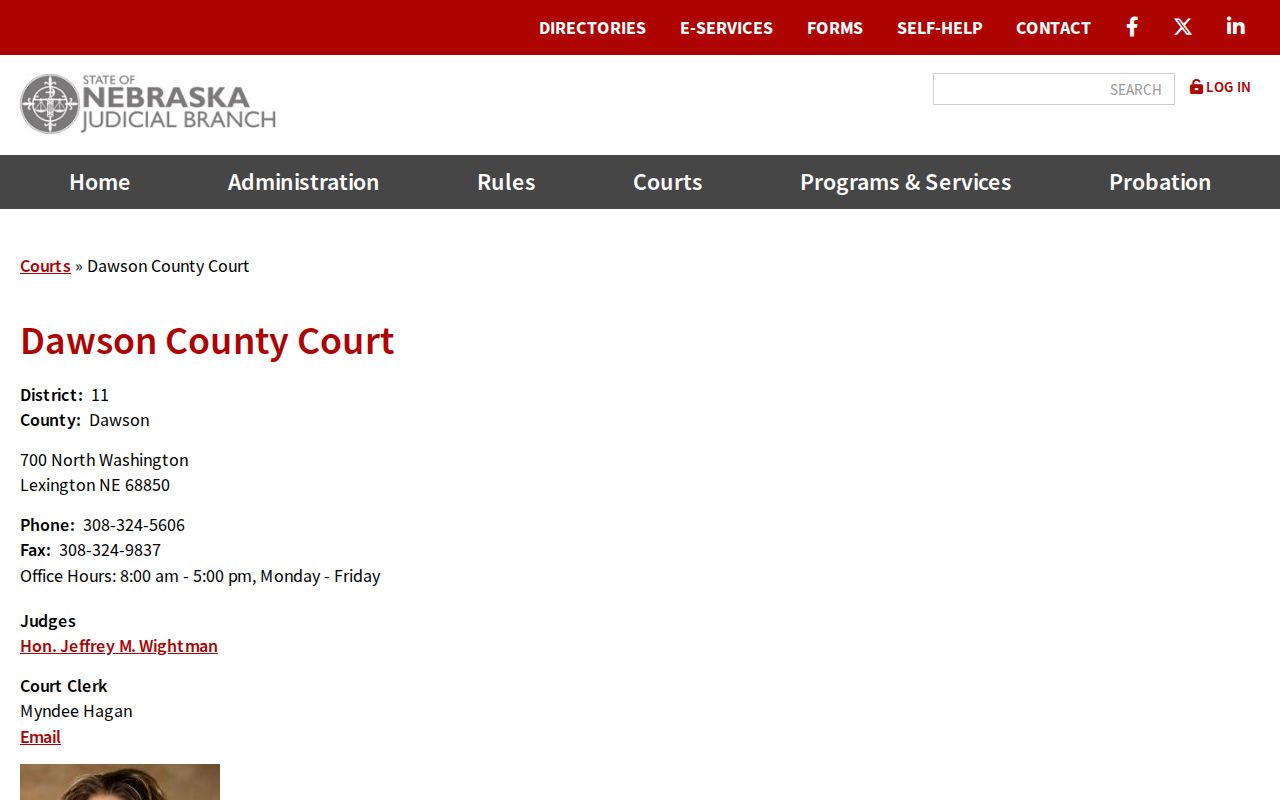
That directory is the sound starting point when a Dawson County case search needs clerk confirmation rather than a third-party summary.
Dawson County JUSTICE Case Search
The Nebraska Judicial Branch JUSTICE service is the statewide remote channel for Dawson County criminal court records. Its live one-time party-name search was priced at $17 during the research pass. It returns up to 30 matching records, remains available for three calendar days, and may trail court entry by about 24 hours. That product supplies case data but not document images. A Nebraska.gov subscriber account offers broader search choices and case details; the live service displayed $2 for details even though older overview text still showed lower legacy pricing.
The Judicial Branch overview shows the available case-information routes.
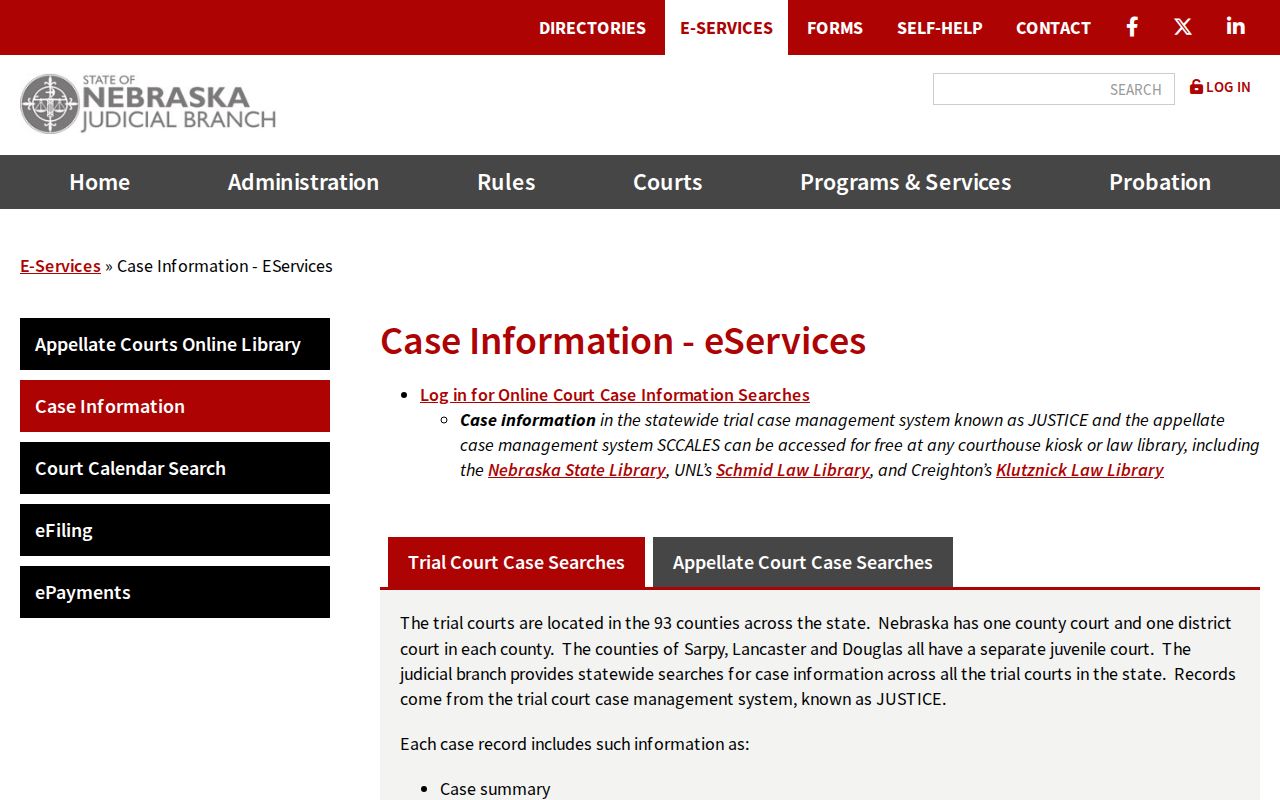
Because live checkout and overview pages disagree on some prices, confirm the amount before paying for a Dawson County court search.
How to Search Case Records
Begin with the legal name used in the case and narrow the statewide system to Dawson County. A case number from a citation, notice, or prior filing is even more exact. The remote service is useful for a quick docket check, but the courthouse kiosk is the better path when cost matters. Participating public law libraries also provide free access to JUSTICE case information. When an image or old file is missing, ask the correct clerk for inspection, a copy, or a certified copy and confirm any charge before ordering.
- Open the official JUSTICE case-information page and choose the one-time party search, subscriber search, or free courthouse access route.
- Enter the party's legal name or use the exact Dawson County case number when it is known.
- Limit a subscriber search by court type, criminal case type, Dawson County, and filing year.
- Read the case summary and register of actions before treating a charge as resolved.
- Contact the County Court or District Court clerk for an older file, public document image, or certified court record.
| Field Label | Type | Required | Notes |
|---|---|---|---|
| Party Name | Text | Varies | Use the legal spelling shown on court papers. |
| Court Type | Dropdown | No | Choose District Court or County Court. |
| Case Type or Subtype | Dropdown | No | Select the criminal category available in JUSTICE. |
| County | Dropdown | No | Select Dawson to localize results. |
| Year | Number or dropdown | No | Use the filing year, not the arrest year, when they differ. |
| Case Number | Text | Conditional | Keep all punctuation printed on the notice. |
Dawson County Criminal Court Split
The court level tells a reader more than the building address. A felony begins with preliminary work in County Court, but its trial and final felony judgment belong in District Court. Misdemeanors, traffic charges, and city-ordinance prosecutions remain in County Court. Nebraska's class labels are not a verdict. They describe the charged offense and possible penalty range, while the court record shows what was actually filed and how it ended.
The Judicial District 11 directory links Dawson County to its district-level courts and offices.
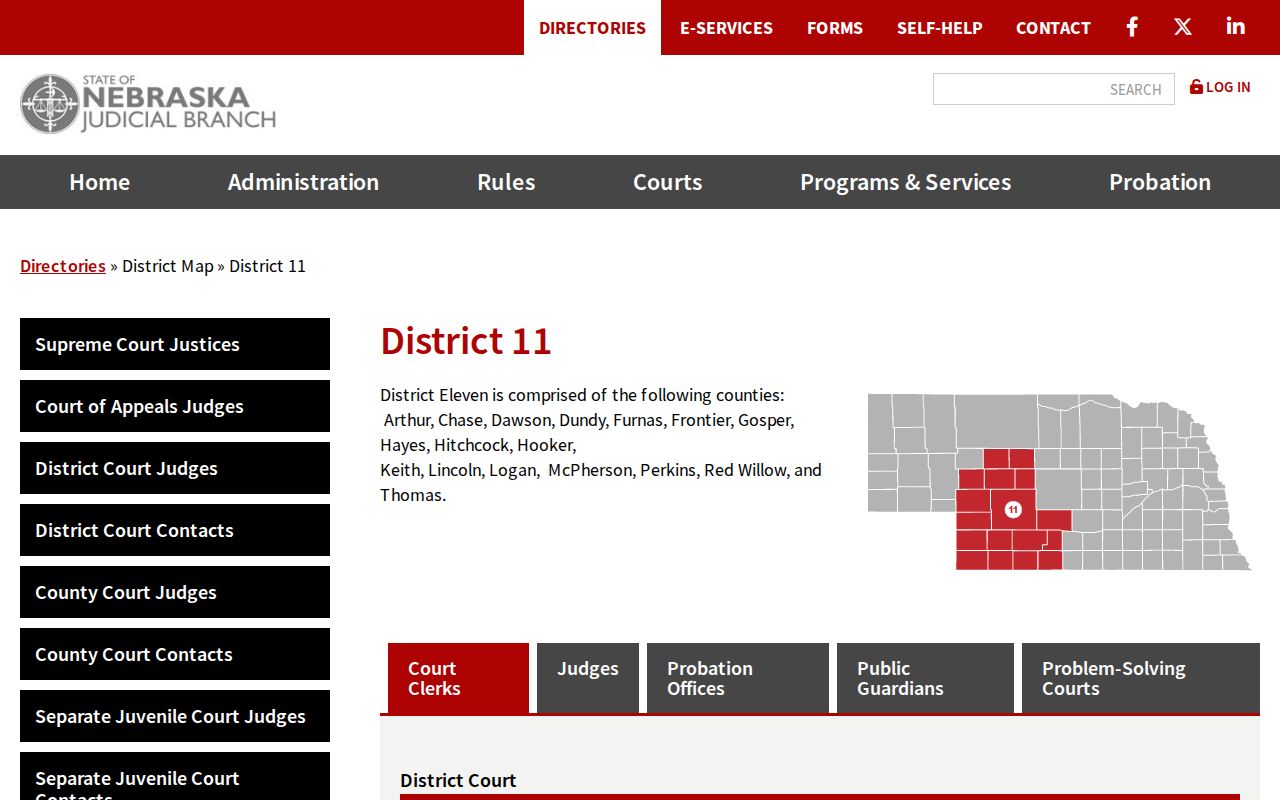
This local court split explains why the same person may appear in County Court events before a felony file proceeds in District Court.
Note: Court workload figures count filings, not crimes committed, arrests made, or people convicted in Dawson County.
What the Case File Shows
A Dawson County criminal case file records prosecution, not the full police investigation. JUSTICE case detail can provide the court, case number, filing date, status, parties, offense data, assessed and paid financial items, register of actions, and judge notes. Public electronic documents may also be linked for subscribers when available. Older documents, sealed items, and confidential filings may not appear. Use the register of actions as the timeline, then obtain the actual order or judgment when the precise ruling matters.
| Case Number and Court | Identifies the Dawson County custodian and the specific prosecution. |
|---|---|
| Charging Document | States the prosecutor's filed allegations, which may differ from booking charges. |
| Docket Entries | Lists filings, hearings, orders, pleas, and other events in date order. |
| Hearing Dates | Shows scheduled and completed court settings where public. |
| Disposition and Judgment | Records dismissal, acquittal, conviction, or another formal outcome. |
| Sentence and Conditions | States the court-imposed result, financial terms, and public conditions. |
A case summary is useful for orientation, but it is not always enough. A signed Dawson County order is the stronger source for a disposition, sentence, or set-aside.
Dawson County Criminal Case Terms
Docket language can look final when it is only a step. An arraignment addresses the charge and plea. A disposition is the outcome of a charge. A register of actions is the dated event list, not a narrative. Reading these terms in context keeps a Dawson County criminal court search from turning an allegation or setting into a claimed conviction.
- Complaint
- A filed charging allegation that begins a court case.
- Arraignment
- The proceeding where the charge and plea are addressed.
- Register of actions
- The chronological list of filings, hearings, and orders.
- Disposition
- The formal result of a charge, such as dismissal, acquittal, or conviction.
- Judgment
- The court's formal decision, which should be checked in the signed record.
Stages of a Criminal Case
Police custody and jail booking may precede a case, but the court record starts when charges are filed. The accused then appears before the court. Motions, discovery, and hearings fill the pretrial stage. A plea may resolve the case, or the matter may proceed to trial. The court records a disposition and, after a conviction, imposes sentence. Each step creates a dated docket entry, yet not every event creates a public image online.
Case flow: Charges Filed › Arraignment › Pretrial › Plea or Trial › Disposition › Sentencing
When the arrest allegation and filed charge differ, use the filed Dawson County complaint or information for the prosecution and the judgment for the final result. The broader Dawson County arrest history explains why the booking record may retain different wording.
Dawson County Archived Criminal Cases
An online gap does not prove that a Dawson County criminal case never existed. The one-time search does not provide images, and the public interface does not promise every older filing. Search by legal name and case number first. Then call the proper clerk and ask whether the file is archived, imaged, sealed, or indexed under a different court event. A written request should identify the case number, party, court, approximate year, and the exact paper needed.
The Judicial Branch maintains a court-record and set-aside resource hub for public access issues.
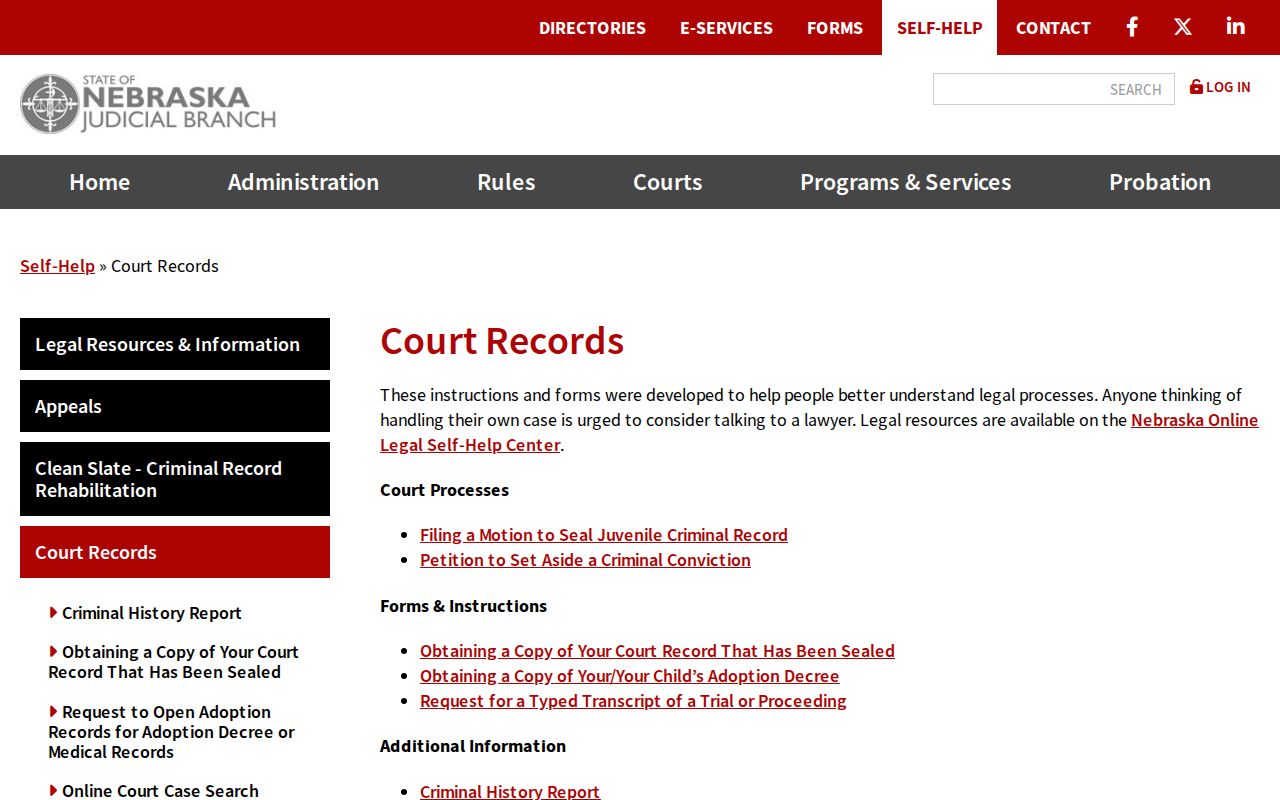
The clerk can explain inspection and copy options, but copy and certification prices should be confirmed because the inspected directory did not publish reliable Dawson County amounts.
Access & Restrictions
Nebraska court records are generally open under trial-court access rules, but public status never means every field is visible. Sealed cases, juvenile material, protected victim data, medical information, Social Security numbers, full birth dates, and other confidential identifiers can be withheld or redacted. Online access can also be narrower than what the clerk may lawfully provide at the counter. If a Dawson County criminal case does not appear, ask the clerk whether the record is restricted rather than assuming it was deleted.
The Nebraska Public Records Act governs many agency records, while court records also follow Judicial Branch rules. A police report and a court file therefore may have different access limits. Requests should be narrow and aimed at the office that created or holds the record. A denial should identify its legal basis, and a reader can ask whether a redacted version is available.
Dawson County Set-Aside Dockets
A Nebraska set-aside under Neb. Rev. Stat. §29-2264 does not erase the Dawson County docket. It nullifies a qualifying conviction for stated legal purposes and adds the court's order. A District Court felony request returns to the district clerk. A County Court misdemeanor request returns to the county clerk. The signed order is the key proof, while the public case history may still show the conviction and later relief.
Arrest-information removal under §29-3523 is a different process. It can limit public dissemination after specified non-conviction outcomes and waiting periods, but it does not turn every court or agency record into the same product. Anyone checking a corrected Dawson County case should compare the clerk's file with the Nebraska State Patrol report and send a wrong disposition back to the originating office.